

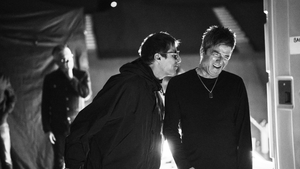
Oasis have “expressed concerns” over plans to auction off a stack of tapes that contain recordings of the band’s gigs, soundchecks and rehearsals from back in the 1990s. The recordings were made by their former sound engineer Huw Richards, and his son Owain is now selling the tapes.
The company overseeing the proceedings, Littleton Auctions, insists the sale of the tapes - which has a guide price of £1.2 million and £1.6 million - is entirely legal. However, any buyer won’t be able to legally exploit or release the recordings on the tapes because of copyright and performer rights.
Euan Lawson from law firm Simkins explains, “Even if a sound engineer owns the physical recordings, there is very little they can do with them”, because “it is highly unlikely that the engineer has any ownership interest in the intellectual property or has the artists’ consent to exploit their performances”.
“So while the physical tapes may potentially be bought and sold”, Lawson adds, “what a purchaser can actually do with the recordings is a very different question”.
The tapes up for sale - a combination of analogue cassettes, DAT tapes and MiniDiscs - include 63 concert recordings, plus over 100 hours of rehearsals, soundchecks and “unfiltered dialogue” between Noel and Liam Gallagher. Richards, who worked with the band from 1994 to 2001, recorded the tapes directly from the sound desk.
Littleton Auctions boss Ben Homer has confirmed that “the Oasis camp is aware of the auction and has expressed concerns, which is entirely understandable given the scale and significance of the material”.
But, he adds, “we’re handling everything with full transparency and proper legal process. Our focus is simply on presenting these items responsibly, with verified provenance, and allowing collectors and institutions to engage with an important part of British music history”.
Owain Richards has spoken to The Times about the tapes, admitting that the band would like the recordings to be “back in their possession”. He also reveals that there were talks with Oasis’s management team a few years ago about the recordings, and the possibility of a deal that would see them returned to the band, but those talks “fizzled away”.
In terms of the legalities of the sale, there are various considerations - including who the actual physical tapes belong to and who has the rights to exploit the recordings contained on them. Crucially, ownership of the physical tapes and ownership of the copyrights in the audio are two different things.
Lawson at law firm Simkins continues, “This case illustrates that physical recording materials can be owned independently of the intellectual property rights embodied in those materials. In practice, however, the position is rarely entirely straightforward. Sound engineers are usually engaged on contractual terms that give them no express rights in either the tapes or files themselves, or the IP embodied in them”.
Even if, as the auction firm suggests, the Richards legitimately own the tapes, it seems highly unlikely they or any buyer of the tapes will have the rights to exploit the content.
In the UK, the default owner of a sound recording copyright is whoever organises for a recording to take place. With studio recordings, that would often be a record label, which would book and pay for the studio sessions. Or the artist and their management team might actually organise the recordings.
However, that default ownership rule isn’t always that helpful when identifying the owner of any one recording copyright. Not least because, if an artist signs a record deal, usually - under the terms of that deal - the label will own or control any recordings even if they don’t actually organise the recording sessions. Including if a recording is made of a live show.
In the 1990s, Oasis were signed to Creation Records, which was ultimately bought out by Sony Music. The band then set up their own label Big Brother Recordings, although continued to work with Sony on the Big Brother releases. Richards, of course, would not have been involved in any of those deals.
That said, if it was Richards who plugged a recording device into the sound desk at the band’s shows, could he say that - by doing so - he basically “organised” the recording and therefore owns the copyright in the audio? That’s where performer rights become relevant. In order to make a recording of an artist’s performance, and exploit the resulting copyright, you need to get the approval of each performer.
Absent that approval, neither Richards nor any buyer of the tapes has the right to exploit the content. Which means, although a wealthy Oasis mega-fan might like the idea of simply having the physical tapes in their possession, in reality the tapes are much more valuable to the band themselves. Because they could commercially exploit the recordings on the tapes.
That said, a bidder in next month’s auction might see that fact as an opportunity in itself. Another lawyer at Simkins, Ben Gisbey, dwells on this aspect of the sale. “Oasis may be able to prevent a buyer from commercially exploiting the recordings without their consent by exercising their performer rights”, he says, but then adds, “it would be shortsighted to view this simply as a sale of memorabilia”.
“The band may wish to exploit the recordings themselves in future, leaving them with a difficult decision”, he goes on. “Do they buy the archive themselves now or do they risk any buyer demanding a substantial fee for access to the recordings down the line?”