

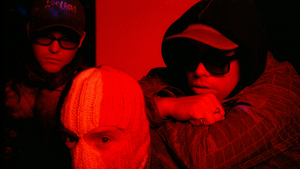
The High Court in London has ruled in favour of Kneecap in the criminal case against band member Liam Óg Ó hAnnaidh - aka Mo Chara - over the alleged display of a Hezbollah flag at a gig in November 2024. Earlier today, high court judges backed a ruling made last year that said prosecutors had missed a crucial deadline when charging the rapper under the Terrorism Act 2000.
In a short statement on Instagram, posted as soon as the High Court judgement was published, the band wrote, “Get in! Kneecap 3, British Government 0”.
That presumably references the three wins Kneecap have now had in legal battles with the UK government: the initial and new ruling in the Hezbollah flag case, plus their win when they challenged the previous Conservative government after it blocked the band from receiving a MEGS grant.
It was the UK Crown Prosecution Service that appealed last year’s ruling regarding the terrorism charge against Ó hAnnaidh. It has already confirmed it accepts today’s judgement, adding that “the high court has clarified” the rules for pursuing prosecutions like this one and the CPS will now “update our processes accordingly”. All of which means Ó hAnnaidh can put the whole Hezbollah flag saga behind him.
Whether that will help the band tackle some of the visa issues they’ve faced over the last year remains to be seen. Critics who have called for the band to be refused permission to play in multiple countries have sometimes cited the pending criminal proceedings under anti-terrorism laws as justification.
Kneecap, of course, have been both commended and condemned for their on-stage support for Palestine and criticism of Israel. Prosecutors alleged that Ó hAnnaidh displaying a Hezbollah flag during a London gig on 21 Nov 2024 violated the law that prohibits public expressions of support for ‘proscribed terrorist organisations’.
To charge Ó hAnnaidh with a terror offence under the relevant section of the Terrorism Act, the CPS needed to get Attorney General approval and then have police formally issue a ‘written charge’ all within six months of the date of the alleged offence. A written charge was issued the day before the deadline, but Attorney General approval wasn’t granted until the day after.
On that basis, last year chief magistrate Paul Goldspring said the criminal case against Ó hAnnaidh could not proceed. That was despite arguments put forward by the CPS that its understanding of the law was that, while formal written charges needed to be issued before the six month deadline, Attorney General approval was not required until the date of a first court hearing.
Goldspring rejected that interpretation of the rules, prompting the CPS’s appeal. Now High Court judges Andrew Edis and Thomas Linden have likewise rejected the CPS’s arguments.
As a result, Edis writes in today’s judgement, “It follows that no written charge was issued within six months of 21 Nov 2024 and the judge was right to hold that he had no jurisdiction to try any summary only offence alleged to have been committed on that date”.
While it’s a definite win for Ó hAnnaidh, Kneecap did basically win this battle on a procedural technicality. Edis stresses this in his judgement. “For the purposes of public understanding we should spell out what this means”, the judge writes, “the respondent has not been tried for his alleged conduct on 21 Nov 2024 and will not be tried”.
As a result, “he has not been convicted and he has not been acquitted”. And this decision “will be of no benefit to anyone else who finds themselves subject to a written charge” under the same section of the Terrorism Act, providing in the future the CPS meets the deadline with Attorney General approval secured.