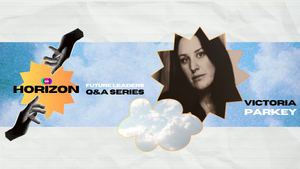
As part of our Horizon Future Leaders series of interviews, we are connecting with the music industry’s next generation of leaders to gather candid advice and insights into their career journeys.
Victoria Parkey made the move from artist management and PR into freelance cultural curation and creative strategy; which essentially means she helps artists, brands and venues build more intentional cultural worlds around their campaigns and programming. It’s the kind of role that didn’t really have a job title five years ago, but it’s exactly what’s missing when campaigns feel hollow or artists lack cohesion.
What’s particularly interesting about Victoria’s path is how deliberately she’s built her cultural literacy. She came up during the pre-Musk era of Twitter when it was still a genuine tool for writers and journalists to connect. She interned at Wichita Recordings at The Strongroom in Shoreditch, a proper hub where she met people across the industry and built relationships that still matter.
She worked at ATC Management, first as a receptionist then in artist management, which gave her a deep understanding of how the industry ecosystem works and sharpened her A&R instincts. Now she mentors through Creative Opps, a non-profit connecting young people from disadvantaged backgrounds with placements in the creative industries.
Her advice for anyone trying to break in: don’t underestimate the value you bring just because you’re younger or less experienced. You have insight that middle-aged bosses don’t, especially from a consumer perspective.
And, as Rick Rubin put it, “I have confidence in my taste and my ability to express what I feel”. Developing confidence in your taste is a genuine asset. Good, unique ideas and thoughtful cultural references always cut through.
Read the full Q&A with Victoria below 👇
What’s your current role in the music industry?
I recently transitioned from artist management and PR to a more holistic freelance role focused on curation and cultural direction. I work with artists on a consultancy basis to help shape their creative strategy, defining tone, identity and direction through cultural referencing.
Alongside that, I run a radio show, write a Substack exploring arts and culture, and am developing a magazine and a podcast with the same focus. I’m particularly interested in working more across brands, venues and events, and collaborating with teams looking to build more intentional cultural worlds around their programming.
What does your general day-to-day look like?
It’s pretty varied, which I love. Every day starts with black coffee and walking my dog, Fuji. I’m trying to prioritise going out and about without headphones, which is a challenge but I think it helps with having space to come up with good - and some bad! - ideas.
A lot of my work depends on having a vast pool of cultural references, so I spend time consuming long-form media: podcasts, radio shows, essays, books and gallery visits, and trying to prioritise slower, more reflective formats over social media.
I also make a point of connecting regularly with other creatives to exchange ideas and perspectives and simply yap, either in person for a coffee or a drink, as well as over Zoom.
What steps did you take early in your career to gain the experience and skills that led to your current position?
In the early days, I said yes to almost every event and show - to the detriment of my sleep! I wanted to be visible and meet as many people as possible.
Studying at Goldsmiths really immersed me in a community of multidisciplinary creatives, which definitely helped shape my obsession with wide-ranging cultural references.
I also worked with a variety of execs and managers, which gave me a real sense of the different ways people operate and helped me refine my own work style.
What early opportunities did you explore that were particularly valuable?
I came up during the era when Twitter was an amazing networking tool - the pre-Musk glory days - especially for writers and journalists, so I used it to connect with people and build relationships as I was doing a lot of journalism at the time.
Interning at Wichita Recordings when they were based at The Strongroom in Shoreditch was another turning point. I met people from across the music industry and really learned the value of community and met people there who I’m still good friends with years later.
Working at ATC Management - first as a receptionist, then in artist management - gave me a deep grasp of how the industry ecosystem works and also really helped shape my understanding of A&R.
How has the opportunity landscape changed since then?
I feel like in a lot of ways it’s much tougher now. The cost of living in London makes it incredibly hard for young creatives based here, and touring has become financially unviable for many musicians.
But at the same time, there are new routes emerging, from building your own lane via newsletters, podcasts and social media to creating projects that grow organically. There’s real space for people who carve out a distinct voice online and use it to build connection which feels really exciting.
Are there specific internships, projects, or initiatives you would recommend to newcomers?
I’ve mentored through Creative Opps, which is a brilliant non-profit that connects young people from disadvantaged backgrounds with mentoring and placements in the creative industries. I really enjoyed working with them and I would highly recommend it!
What advice do you have for building and leveraging a professional network in the music industry?
Don’t be afraid to reach out to people whose work you’re interested in and ask for a coffee or to say hi on Zoom. The worst outcome is no reply and then you can move on to the next!
Be curious, friendly and engaged - the people who stand out are the ones who bring good energy and genuine interest and ideas.
I think it’s really important to realise that even if you are younger than everyone else around the table and don’t have much direct experience in the industry, you can still add invaluable insight, especially from a consumer perspective - the middle-aged bosses aren’t familiar with the same cultural touchpoints that you are!
In early opportunities or internships, friendliness, inquisitiveness and enthusiasm really go a long way.
How has the evolving digital landscape impacted your role, and how do you stay ahead?
I’m really inspired by how the internet has become a space for niche communities and deep cultural storytelling. I follow a lot of Substacks and podcasts and am really enjoying long-form video essays.
I think creators like Mickey Galvin are doing really cool work in this space, and I really like the personality-driven, informal interview styles of podcasts like How Long Gone. I’m always on the lookout for clever, creative people doing something interesting.
What trends do you see on the horizon, and how can early-career professionals prepare for them?
I’d love to see a shift away from chasing viral social media moments and back toward building immersive worlds that audiences can feel a part of. Projects that feel more like ecosystems - Charli XCX’s Brat campaign was obviously a masterclass in this - are really special and memorable.
I think the next generation of artists and creatives will find a lot of power in slow-burn projects, intimate communities and experiences that bring together digital and physical worlds.
What is one piece of advice you wish you had received at the start of your career?
Rick Rubin’s line “I have confidence in my taste and my ability to express what I feel” really changed the way I think about creative work.
Developing confidence in your taste is such a huge asset. Good, unique ideas and thoughtful references always cut through, and always be open to collaboration and constant learning.
