

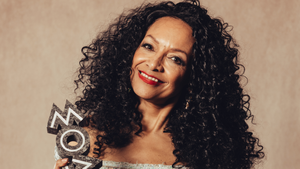
The music industry has today paid tribute to Kanya King, founder and CEO of the MOBO Awards, and the wider MOBO Organisation, who died earlier this week. A statement from MOBO says King died on Wednesday “after a courageous and characteristically determined battle with colon cancer” and “surrounded by her family, close friends and love”.
Among those paying tribute is artist, broadcaster and BPI Chair YolanDa Brown, who says, “my first ever award was a MOBO Award in 2007 and it was the spark my career needed at that time - I know I am one of countless artists whose journey was encouraged, amplified and validated by Kanya’s vision”.
What made King so remarkable, Brown continues, was that she “spent her career, through the vehicle of MOBO, creating a platform so that there could be other Kanyas, other Tinie Tempahs, other Emeli Sandés, and so many more artists whose names, stories and gifts may not otherwise have been given the space they deserved”.
MOBO’s own statement recounts how King first created the MOBO Awards, to celebrate music of black origin, 30 years ago, when she “remortgaged her home” and proceeded, “alone, without institutional backing, without industry support” to build a platform “that would transform British music forever”.
It goes on, “She was a single mother from a Kilburn council estate who was told that black music was too niche, that there was no market and that the industry was not interested. Instead of arguing, she built. Six weeks later, the first MOBO Awards was broadcast to the nation and nothing was ever the same again”.
MOBO was obviously more than just its headline grabbing awards ceremony, both logistically - in terms of the other programmes the MOBO Organisation delivered - but also in terms of its impact.
MOBO’s statement continues, “what Kanya created was never simply an awards ceremony. It was an act of cultural justice. MOBO did not just celebrate black music; it legitimised it, amplified it and demonstrated its commercial and creative power to a world that had too often chosen not to see it”.
Black Lives In Music is among the industry organisations to have paid tribute today, also noting that King “created a platform that did more than celebrate black music, it demanded that black creativity, culture and excellence be seen, respected and recognised on a national and international stage”.
King’s legacy, it adds, is “woven into the story of black British music, and her contribution will continue to inspire everyone working towards a fairer and more representative music industry. Our thoughts are with her family, loved ones, colleagues and the entire MOBO community at this incredibly sad time”.
In its statement, UK Music says that King “was a great visionary, with huge ambition, determination and perseverance, the likes of which we will probably never see again”, adding that she leaves “a permanent and positive mark on music and society as a whole”.
Meanwhile collecting society PRS calls King “an extraordinary pioneer who fundamentally reshaped the British music landscape”, adding that “as the powerhouse founder of the MOBO Awards, Kanya was a tireless champion for diversity, inclusion and the recognition of exceptional talent that the mainstream had long overlooked”.