

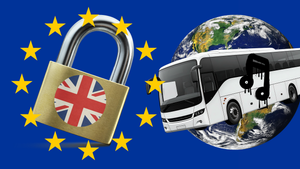
More than 300 cultural organisations across Europe - including UK Music, LIVE and the Musicians’ Union - have signed an open letter calling on UK Prime Minister Andy Burnham and European Union leaders to use next week’s UK-EU Summit to “break the deadlock over touring the UK and the EU”.
Which mainly means dealing with the mess created by Brexit when it comes to UK artists touring, and otherwise doing business, within EU member states.
“Culture is Europe’s most powerful connector”, the open letter declares. And yet “current arrangements for touring and other forms of creative collaboration are weakening that connection and undermining a sector that delivers economic value, global influence and shared cultural understanding”.
Ten years on from the stupid referendum that resulted in stupid Brexit, now is the time for UK and EU leaders to address the issues it caused artists and performers. Or, in the words of the open letter, “the 2026 Summit presents a critical opportunity to tackle the unintended consequences” of Brexit and in doing so “unlock opportunities for performers, artists, crews, businesses and audiences across Europe”.
If any of this sounds familiar, it’s because the music and wider cultural industries made similar demands ahead of the first UK-EU Summit that took place in May 2025. Back then UK and EU political leaders were urged to use “these important talks” to “overcome obstacles and barriers” that are negatively impacting on artists and performers looking to tour and collaborate across Europe.
Following the 2025 summit a nine page ‘Common Understanding’ document was published, point fifteen of which stated, “the European Commission and the UK recognise the value of travel and cultural and artistic exchanges, including the activities of touring artists. They will continue their efforts to support travel and cultural exchange”. Though since then, it’s not been entirely clear what those efforts have involved.
The new open letter says that that commitment in the 2025 ‘Common Understanding’ document “sent a strong political signal and was warmly welcomed by the sector”. However, “since then, there has been no dedicated formal dialogue nor tangible progress”. Which is a polite way of basically saying, pretty much fuck all has changed since the 2025 Summit.
The issues created by Brexit for British performers and their teams have been widely documented.
There are now different visa and travel permit rules in different EU countries, while artists also have to navigate extra customs procedures, transport and haulage restrictions, and tax complexities around merchandise sales. This has resulted in additional costs and bureaucracy which, for many artists, can make touring Europe an unviable proposition.
A report commissioned by the UK government and published earlier this year provided some stats to illustrate the impact of Brexit, revealing that the total number of performances by British artists in Europe in 2024 was 21% down compared to 2019, ie before the UK existed the EU.
And in terms of economic impact, the report estimated that the UK music industry and other performing art sectors together lost £208 million in ‘gross value added’ and about 2490 jobs between 2022 and 2024.
And it’s not just the UK music industry that is impacted, with the same report also crunching numbers for 20 EU member states, and estimating that the impact of post-Brexit touring bureaucracy on those countries and the UK combined was a GVA loss of approximately £1.04 billion.
Ahead of the 2024 General Election, the Labour Party specifically referenced “touring artists” in its manifesto commitment to “improve the UK’s trade and investment relationship with the EU” by “tearing down unnecessary barriers to trade”.
While UK ministers could unilaterally provide more support for the artists who are navigating all this post-Brexit bureaucratic bullshit, really tackling the issues will require the UK and EU to work together.
With Burnham more willing than his predecessor Keir Starmer to discuss the negative impacts of Brexit and the need to address them, there are some hopes that the current government is perhaps more likely to actually make good on that manifesto commitment.
Although there’s a long list of Brexit-caused challenges for the government to discuss with EU leaders, so it remains to be seen how much attention is given to the music and creative industries.
The new open letter is pretty clear in its demands, insisting that next week’s Summit should “establish a structured EU-UK dialogue with a clear pathway to unlock the full potential of EU-UK cultural exchange”.
And that should include “practical solutions for the movement of touring professionals and essential equipment, as well as the UK’s cooperation and involvement in European programmes, such as Creative Europe, which facilitate international partnerships and exchange”.
The new letter has been organised by the Cultural Exchange Coalition, which was set up last December to coordinate organisations across the music and creative industries across Europe to lobby on this issue.
Other members include pan-European organisations like the European Music Exporters Exchange, the European Music Managers Alliance and Pearle*, which represents the live sector across Europe, plus a plethora of music and cultural industry trade groups from the UK and other European countries.