

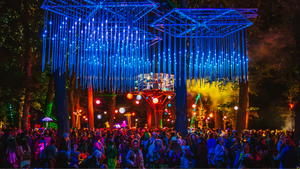
The co-founders of music festival Shambala have announced they are transferring ownership of the event into an ‘employee ownership trust’, meaning the Shambala business will basically be controlled by the team that delivers the festival.
Announcing the move, the festival’s MD and co-founder Chris Johnson says, “all of us at Shambala have an emotional stake in what we have built over 25 years - now everyone has an ownership stake too. We would be nothing without our people and they deserve to carry on the Shambala legacy as beneficiaries”.
Given concerns about the dominance of a small number of major global corporations in the music industry - like Live Nation in tours, festivals and ticketing, and Universal Music in recordings, publishing and distribution - it’s interesting to see a small number of independent music businesses go this route, basically safeguarding their independence in the longer term.
Employee ownership trusts were conceived by the UK government to promote employee ownership of businesses. PWC explains that such trusts “do not involve direct share ownership by employees, rather a controlling interest in a company is transferred to an all-employee trust which is then held for the benefit of employees”.
The Employee Ownership Association estimates there are now nearly 2500 employee-owned businesses in the UK. That includes some in the music business. In 2023, music distributor Kudos Records became an employee ownership trust, and then in 2024 physical music product specialist Key Production did the same. Shamabala believes it is the first festival to adopt this model.
In a statement, the festival says that its shift to employee ownership “comes at a time when many independent festivals are being acquired by major live entertainment conglomerates”, which includes Live Nation and the private equity-owned Superstruct.
Johnson continues, “Shambala stands for independence and, in an increasingly commercialised festival scene, we simply could not sell to venture capitalists or the big promotion companies”. While “exploring alternative paths”, he explains, “we fell in love with the employee ownership model”.
Dan Raffety, another co-founder of Shamabala and the festival’s Head Of Music, adds, “It is patently clear that the current capitalist model is fundamentally broken. As a society we must explore alternative models of ownership as a way through which the massive power and potential of capitalism can be focused on serving humanity and the planet at large”.