

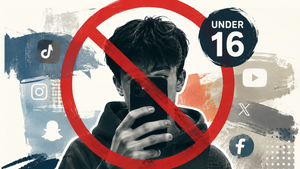
The UK government has announced plans to stop under sixteens from using social media, introducing a ban similar to that already in place in Australia, with British ministers declaring that “children will be given back their childhoods”, with “less time for scrolling and more time for play”.
It means anyone in the UK music industry seeking to reach and engage music fans in their early teens will need to change their strategies and rely more on other channels and platforms. That might include gaming platforms; streaming services without social functionality, like Spotify, Netflix or indeed YouTube if accessed through a browser without an account; and even traditional media like TV and radio.
In theory the UK music community will be able to learn from their counterparts in Australia, although the UK ban looks set to be more wide-ranging, potentially covering more platforms and more online experiences, including some gaming experiences.
Plus it’s debatable how effective the Australian ban has actually been since it went into force at the end of last year, and UK ministers hope that their ban will be harder to circumvent.
Announcing the big plan in a statement earlier today, Prime Minister Keir Starmer says “we’re going further than any country in the world by banning social media for under sixteens and putting wider protections in place to give kids their childhood back”. This is what most parents want, he insists, saying “I’ve heard first hand from families crying out for change and we will do right by them”.
While most social media platforms have put in place some voluntary measures to protect users in their early teens, they are simply not enough, Starmer says, adding “tech giants had their chance and failed”, so “we’re stepping in to protect children, back parents and set a new normal for future generations”.
At a basic level, the new UK social media ban will follow the approach taken in Australia, applying to “user-to-user platforms, whose purpose is to enable social interaction and which allow users to post material, alongside algorithms”. The ban will therefore apply to TikTok, Instagram, YouTube, X, Facebook and Snapchat, but not messaging services like WhatsApp and Signal.
In addition to that basic ban, there will also be additional blocks for under sixteens on ”harmful functions such as livestreaming and stranger communication” on other platforms, including gaming sites. Quite how that will work and what it will restrict remains to be seen.
On top of the ban for under sixteens, the government is also planning new restrictions for sixteen and seventeen year olds, aiming to “prevent a cliff-edge at sixteen”. Those restrictions are still being worked out, but ministers say they are considering “overnight curfews and breaks in infinite scrolling”.
In her own statement about the ban, Technology Secretary Liz Kendall says, “Today we take a bold and significant step, towards creating a safer, healthier life online, for our children and future generations. Tech companies have had countless opportunities to keep children safe, yet they have failed to act. That is why we are taking power away from the tech giants and putting it back in parents’ hands”.
Opinion is very much divided over whether or not an outright ban for under sixteens is necessary or desirable - or even achievable, with some studies in Australia suggesting most teens have found ways around the ban there and are still using social media apps on a regular basis.
The UK government says it has assessed issues with the Aussie ban and will introduce “more highly effective age assurance measures to support compliance”, making it far harder for teens to “bypass safeguards”.
Whether or not that is realistic is hard to say right now. Though even if, as in Australia, any ban seems pretty ineffective at launch, it could become more effective with time. And if it does, music marketers will need to monitor any change and figure out what it means for reaching and engaging younger fans.
For their part, the social media platforms are generally and unsurprisingly critical of the bans, usually arguing that they have worked to put protections in place for younger users, and that blanket bans risk pushing teenagers to rogue apps and websites that ignore the ban and offer none of those protections.
But with more countries considering similar bans, we may start to see some of the platforms develop versions of their apps for younger teens that present a limited range of content, without the more addictive short-form video feeds and sometimes problematic social functions, a bit like the existing Kids version YouTube offers for the under twelves.