
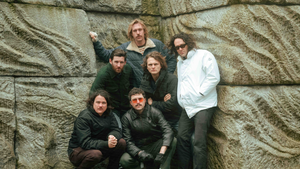
After King Gizzard & The Lizard Wizard joined the growing number of artists boycotting Spotify earlier this year, AI-generated songs using the band’s lyrics popped up on the streaming service, confusingly credited to King Lizard Wizard.
They have now been removed, but were seemingly on the platform for several weeks, illustrating the ever increasing challenges facing streaming services and the music industry when it comes to monitoring the uploading of AI-generated tracks that may infringe an existing artist's rights.
According to Futurism, a Reddit poster recently reported that they had been recommended King Lizard Wizard tracks by Spotify. They then found an album’s worth of tracks that had the same titles and lyrics as King Gizzard songs, but with an alternative AI-generated melody.
King Gizzard & The Lizard Wizard announced they were pulling their music from Spotify back in July in protest at investments made by the streaming service’s CEO Daniel Ek in AI weapons company Helsing, urging fans to “join us on another platform”.
The Reddit poster obviously didn't follow that request at the time. However, since being recommended a “bad AI rip-off” of the band by Spotify, they have now cancelled their account, their Reddit post revealed. “I find this absolutely deplorable”, they added.
Where artists have decided to boycott streaming services, the focus of the boycott is generally on their own recordings, rather than any cover versions of their songs. How easy it would be for an artist to remove straight-forward human-created covers of their music would depend on the country, and what publisher or collecting society is licensing their song rights in any one market.
Generally with cover versions on streaming services, it is assumed the song rights are covered by the platform’s existing licences, with the relevant publishers or collecting societies claiming any royalties that are due. A publisher might have the right under its licence with Spotify to block any one cover if it wanted to, though such blocking has not generally been the norm to date.
However, if a cover was seen to be an adaptation of a song, rather than a straightforward cover, a publisher - on its own or at the request of a songwriter - might be more likely to block that track from streaming, and would generally be in a stronger position to request such a block.
Given the AI-generated King Lizard Wizard tracks seemingly took King Gizzard’s lyrics but set them to a different composition, that would constitute an adaptation, which would make it easy for King Gizzard’s publisher to demand those tracks be removed.
Though there would be other grounds for removal too, such as the fact the artist name was deliberately misleading, and therefore arguably a case of ‘passing off’ in legal terms, not to mention all the copyright infringement that possibly occurred when the tracks were AI generated.
So, in this scenario, legally speaking, getting the sneaky King Lizard Wizard tracks taken down was probably straightforward. The bigger challenge - and presumably the reason the tracks streamed away for several weeks before removal - is spotting the problems in the first place.
That’s an increasingly big talking point within the music industry, of course, with plenty of debate on what takedown policies should look like and who should be responsible for enforcing them.
To what extent Spotify was at fault in this scenario is part of that debate. Though, given King Gizzard’s existing beef with the streaming service, it’s not a great look to start recommending music by an AI clone of a band who are already boycotting you.