

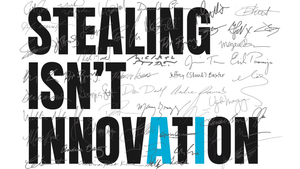
Hundreds of American creators and performers have signed a new declaration on AI under the banner ‘Stealing Isn’t Innovation’. They demand that AI companies that are training generative AI models with existing content seek licences from creators and copyright owners, rather than just using that content without permission and claiming doing so is ‘fair use’ under US copyright law.
“America’s creative community is the envy of the world and creates jobs, economic growth and exports”, the new declaration says. “But rather than respect and protect this valuable asset, some of the biggest tech companies, many backed by private equity and other funders, are using American creators’ work to build AI platforms without authorisation or regard for copyright law”.
As far as the signatories of the declaration are concerned, of course, that is not acceptable. “Stealing our work is not innovation”, it says. “It’s not progress - it’s theft, plain and simple”.
The declaration is a reminder that, while some AI companies are now agreeing licensing deals with rightsholders - including in the music industry - many continue to make use of existing content without getting permission. Plus the tech sector’s lawyers and lobbyists continue to work hard to secure legal precedents or legislative reforms that reduce the copyright obligations of AI businesses.
The declaration notes that some AI companies are going the licensing route and basically calls on the rest to follow their lead. “Some AI companies have taken the responsible, ethical route to obtaining the content and materials they wish to use”, it says, that being “licensing deals and partnerships”.
With that approach, it goes on, “it is possible to have it all - we can have advanced, rapidly developing AI and ensure creators' rights are respected”.
Among the hundreds of signatories backing the ‘Stealing Isn’t Innovation’ declaration are actors, writers and authors, as well as musicians. Music signatories include Aimee Mann, Cyndi Lauper, Common, Dan Navarro, MGMT, One Republic and REM.
It’s been organised by the Human Artistry Campaign, a global initiative instigated by the US record industry but backed by the wider media and entertainment sectors, and involving organisations that represent rightsholders as well as creators and performers.
When it comes to the copyright obligations of AI companies - which are the direct target of this declaration - rightsholders, creators and performers are more or less aligned: AI companies must get licences and pay to make use of existing content.
Though, as some AI companies do start to secure licences from rightsholders like labels and publishers and then pay money into the entertainment industry, the interests of corporate rightsholders on the one side, and creators and performers on the other, are not necessarily aligned.
Which is why we have started to see music creator groups around the world become increasingly critical of the major record companies because of the lack of transparency regarding the deals they have negotiated with the likes of Udio, Suno and others.
However, those criticisms are not part of the ‘Stealing Isn't Innovation’ campaign, which is clearly aimed at the AI companies, and any lawmakers in Washington considering supporting a rewrite of copyright law to the advantage of big tech.