

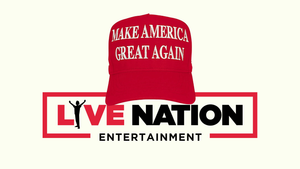
We already knew that Live Nation was hiring lobbyists close to Donald Trump as it tried to pressure the US government to settle the antitrust lawsuit it had filed against the live music company in 2024, but it turns out it was also hiring lawyers closely connected to the President.
Specifically James McDonald from law firm Sullivan & Cromwell, who had little antitrust experience but had represented Trump in some of his personal legal battles.
That’s according to a new Wall Street Journal investigation, which has looked at the role played by Trump and his White House team in getting the US Department Of Justice to settle its lawsuit that accused Live Nation and its Ticketmaster subsidiary of anticompetitive conduct.
According to the WSJ’s investigation, many DoJ officials regarded the political interference in the Live Nation case by Team Trump as “extreme”, even in the context of an administration “in which the President has openly pressured law-enforcement officials to pursue perceived enemies and pardoned allies”.
The DoJ did settle in March, when the case was already at trial, though many of the individual US states also involved in the litigation declined to join the settlement, ultimately convincing a jury that Live Nation and Ticketmaster do indeed operate an unlawful monopoly.
The DoJ settlement is now being reviewed by the judge overseeing the case, Arun Subramanian, and - as part of that process - Live Nation had to provide the court with a summary of its communications with the DoJ and wider US government. In June it revealed that CEO Michael Rapino had a meeting with Trump back in February during which the then ongoing antitrust legal battle was discussed.
According to the WSJ, Trump requested the meeting with Rapino to discuss how Live Nation might help improve bookings at the Kennedy Center, the government-owned Washington venue that the President has been busy politicising and, as result, destroying.
But the President also wanted to know why Live Nation hadn’t yet been able to settle the antitrust dispute with the DoJ. Live Nation previously told the court that “no substantive terms regarding any potential settlement” were discussed at that meeting, a claim that the WSJ report doesn’t dispute, but - shortly after his conversation with Rapino - Trump allegedly called the DoJ and told them to settle.
The following month, the WSJ report adds, Rapino returned to the White House for a meeting with then DoJ boss Pam Bondi and White House Counsel David Warrington. Rapino was joined by attorney McDonald, Live Nation having hired the services of his law firm Sullivan & Cromwell back in December.
Although two other partners from that firm working on the case had relevant antitrust experience, WSJ notes that McDonald himself did not, but he had previously worked for Trump. The President subsequently nominated McDonald to be Manhattan’s top federal prosecutor.
McDonald wasn’t the only lawyer close to Trump taking an interest in the case. The WSJ also reports that
DoJ officials “learned that Boris Epshteyn, Trump’s private legal coordinator, had taken a keen interest in resolving the case. The officials didn’t know whether he was working for Trump or Live Nation, or both”.
Ultimately Live Nation’s strategy of hiring Trump allies paid off, in that it got a settlement from the DoJ which - many of the company’s critics argue - involves the live music company making some nominal concessions that won’t really impact on its dominance of the live entertainment market in the US.
And crucially the DoJ completely dropped the biggest of its demands in the ongoing legal battle, which was forcing Live Nation to sell off Ticketmaster, reversing the 2010 merger that brought the two companies together in the first place.
Although, of course, Trump’s backing didn’t stop most of the US states also involved in the legal battle from proceeding and winning in court. And as Judge Subramanian considers what remedies he should order on the back of the jury’s monopoly ruling, the states are still pushing for Live Nation and Ticketmaster to be split up.
Responding to the WSJ’s report, Live Nation’s EVP Of Corporate And Regulatory Affairs Dan Wall defended the company’s decision to directly liaise the White House and DoJ leadership, rather than negotiating with the DoJ antitrust team that were actually leading on the lawsuit.
He said, “The only reason we went above the antitrust division to senior DoJ leadership is because no one there would speak to us. When you’ve been unable to get a meeting for six months, you have every right to try something else”.
He also again defended the DoJ settlement, insisting that the company’s critics are mainly disparaging of what was agreed because they are “comparing this settlement to the irrational hope of breaking up Live Nation and Ticketmaster”. But in fact, he reckons, given “the actual claims in this case”, the DoJ settlement got “as much or more” out of the company as “they could have expected to win in court”.
The public can currently comment on the merits of the DoJ settlement as part of Subramanian’s review of the deal. The judge is expected to make a decision on whether or not to approve the settlement in late September or early October. He also needs to consider Live Nation’s bid to reverse the jury’s monopoly ruling and what the states are asking for in terms of remedies.