

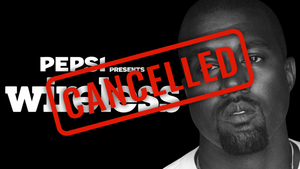
Live Nation’s Wireless festival went from its first big announcement of the season to cancellation in just eight days thanks to the event’s controversial headliner: Mr Kanye West.
The company’s Festival Republic division - headed by festival veteran Melvin Benn - went into damage limitation mode over the weekend as the festival’s sponsors, including Diageo and long term brand partner Pepsi, all started to bail.
That followed wide-ranging criticism last week over the decision to have West - an outspoken antisemite from 2022 until late last year, who released the song ‘Heil Hitler’ just last May - headline all three nights of the 2026 edition of the long-standing London festival.
Ultimately, it was the UK government’s decision to revoke the rapper’s travel permit that caused the show to be cancelled. However, that decision from the Home Office has possibly done Benn, Live Nation and Festival Republic a favour.
The backlash over West’s booking has been gaining momentum over the last week and Festival Republic’s crisis communications was doing little to slow down the criticism. Had it gone ahead, Live Nation was potentially facing fifteen weeks of PR hell.
That extreme backlash to booking West for Wireless was entirely predictable. While the rapper has apologised for his past antisemitic comments, that was only in January. And, as critics have noted, previous apologies from West were followed by new antisemitic conduct, meaning it was hard not to be cynical about this latest apology, which was published as he prepped the release of a new album.
Presumably Live Nation UK bosses thought they could weather the storm, perhaps motivated by the two concerts the rapper performed in Los Angeles last week. They were also heavily criticised, especially by Jewish groups, but still sold-out, reportedly netting the rapper $33 million. Live Nation is a business partner of Rod Wave, who promoted those two shows.
In a statement confirming Wireless 2026 was cancelled, Festival Republic insists that “multiple stakeholders were consulted” in advance of West being booked to play the festival and “no concerns were highlighted at the time”. It’s not clear who those stakeholders might be, but it would presumably include the event’s sponsors, especially headline sponsor Pepsi.
The Campaign Against Antisemitism, which was particularly vocal in criticising the decision to have West play Wireless, is also disparaging of that new statement from Festival Republic. “Apparently ‘no concerns were highlighted’ about Kanye West at the time of the booking”, a spokesperson says. “Who were they consulting? A wall?”
Though, they add, perhaps it’s unsurprising that stakeholders didn't raise any concerns earlier, if “the only stakeholders you speak to are those who stand to make a profit”.
Prior to the cancellation, Benn published a personal statement justifying the decision to book West to headline all three nights of Wireless 2026. He acknowledged that West’s past antisemitic conduct was “abhorrent”, but said that - given the rapper’s apology in January - he believed the rapper now deserved a “second chance”.
In his January apology, delivered via a full page advert in the Wall Street Journal, West wrote about the impact of living with bipolar disorder. He said that, as he struggled with his mental health, he “lost touch with reality” and “I said and did things I deeply regret”.
In his statement, Benn wrote, “Having had a person in my life for the last fifteen years who suffers from mental illness, I have witnessed many episodes of despicable behaviour that I have had to forgive and move on from. If I wasn’t before, I have become a person of forgiveness and hope in all aspects of my life, including work”.
By booking West to play Wireless, Benn went on, “we are not giving him a platform to extol opinion of whatever nature”, but are instead simply allowing the rapper “to perform the songs that are currently played on the radio stations in our country, and the streaming platforms in our country, and listened to and enjoyed by millions”.
He then concluded, “forgiveness and giving people a second chance are becoming a lost virtue in this ever-increasing divisive world and I would ask people to reflect on their instant comments of disgust at the likelihood of him performing (as was mine) and offer some forgiveness and hope to him as I have decided to do”.
As Festival Republic’s damage limitation communications continued, West himself issued a new statement. He declared that “I’ve been following the conversation around Wireless and want to address it directly”.
“My only goal is to come to London and present a show of change, bringing unity, peace and love through my music”, he went on. “I would be grateful for the opportunity to meet with members of the Jewish community in the UK in person, to listen. I know words aren't enough - I’ll have to show change through my actions. If you’re open, I’m here”.
In response to that, the Campaign Against Antisemitism said, “Kanye West and Wireless have to choose: profit or principle. If Mr West cancels his appearances at Wireless, it will be a sign that he may be genuine in his remorse. If he does not, then a meeting with Jewish groups can serve no purpose other than to kosher his invitation to the festival - which we will play no part in”.
Over the last week, it wasn’t just the likes of the Campaign Against Antisemitism that were loudly criticising Wireless and Live Nation over the decision to book West. Politicians across the political spectrum also criticised the booking, with Prime Minister Keir Starmer calling it “deeply concerning”.
Meanwhile sponsors included Diageo, Pepsi, Rockstar Energy, Budweiser and PayPal all pulled out of or reduced their involvement with the festival. And while for a standalone Kanye West show sponsors aren’t so important, for a festival like Wireless, brand partners are usually key to ensuring an event is profitable.
With Festival Republic initially standing by its decision to have West play Wireless, attention turned to whether or not the UK government would exercise its powers and block the rapper from performing in the country. The festival insisted that West had the “legal right to come into the country and to perform”, but reports began to circulate that ministers were actively considering whether to withdraw that right.
According to the statement cancelling the festival earlier today, following that review, the Home Office decided to withdraw West’s travel permit - specifically his ‘electronic travel authorisation’ - causing the event to be pulled.
Today’s statement concludes, “antisemitism in all its forms is abhorrent, and we recognise the real and personal impact these issues have had. As [West] said today, he acknowledges that words alone are not enough, and in spite of this still hopes to be given the opportunity to begin a conversation with the Jewish community in the UK”.