

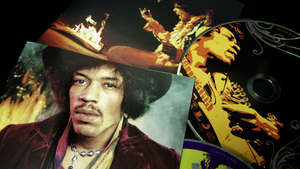
Sony Music UK has successfully defeated a lawsuit filed by the estates of Noel Redding and Mitch Mitchell, who, along with Jimi Hendrix, made up the band The Jimi Hendrix Experience.
Sony distributes the band’s recordings via a licensing deal with Experience Hendrix, a US-based business controlled by the Hendrix estate. Two UK-based companies respectively representing the interests of the Redding and Mitchell estates claimed that, in doing so, the major was infringing rights they control in relation to the band’s catalogue. And to that end, they sued Sony through the UK courts.
But, following a ten day trial last December, Judge Edwin Johnson has now concluded that that’s not the case. It was a dispute that involved multiple contracts and a plethora of legal technicalities, but Johnson’s ruling was mainly based on his interpretation of a 1966 agreement between the members of The Jimi Hendrix Experience and producers Chas Chandler and Michael Jeffery.
In a joint statement, Sony and Experience Hendrix say they are “thankful that this litigation, which has lasted over four years, has come to an end”. And they are very pleased indeed that “the High Court has confirmed that there has been no infringement of any rights” and that the two companies “are fully entitled to exploit their rights in The Jimi Hendrix Experience catalogue”.
There were two elements to the lawsuit filed by the Redding and Mitchell companies. Firstly, that they were co-owners of the copyrights in the JHE recordings, and therefore Sony needs a licence from them as well as Experience Hendrix to distribute the music. And secondly, that the ongoing distribution of the JHE recordings infringed Redding and Mitchell’s performer rights.
The copyright claim
On the first point, Johnson had to review what UK copyright law said about the ownership of sound recording rights in the late 1960s, when the recordings were made. So that means rules set out in the 1956 Copyright Act, rather than the current rules put in place by the 1988 Copyright Act.
Basically, under the 1956 act, whoever owned the tapes on which a recording was made or whoever commissioned a recording session was the default first owner of the sound recording copyright.
The Redding and Mitchell companies argued that the band’s members owned the tapes and/or commissioned the recordings. But Johnson concluded that the 1966 agreement - coupled with a 1966 invoice sent by a studio used by the band to producers Chandler and Jeffrey - suggested otherwise.
And given all five of the musicians and producers involved in the recordings have died - and with the judge deciding that relevant sections of Redding’s autobiography were “far too opaque” to be much use as evidence in court - Johnson could only rely on his interpretation of the 1960s paperwork.
In his judgement, Johnson writes that, “the evidence of the surviving invoice and the evidence of the terms of the recording agreement are sufficient to demonstrate, on the balance of probabilities, that the producers were the owners of the master tapes on which each of the recordings was made”.
The same two documents, he adds, “are sufficient to demonstrate, on the balance of probabilities, that the producers commissioned the making of the recordings, that the producers agreed to pay and did pay for the making of the recordings, and that the recordings were made in pursuance of those commissions”.
The 1966 agreement actually stated outright that the producers would have “the copyright throughout the world in all sound recordings of performances of musical works by the artistes”. However, the Redding and Mitchell companies argued that clause was basically a licence, granting the producers control over the rights in the recordings during the time period covered by the 1966 deal.
Johnson does not agree. He says that clause seems “clear and unequivocal”, and it means “the producers and the band members agreed that the producers would have the copyright throughout the world in the recordings; that is to say the copyrights. There was no temporal or territorial limitation to this agreement”.
Therefore, Johnson concludes, neither Redding nor Mitchell were co-owners of the copyrights in JHE recordings, with those rights belonging to the producers. And through a series of subsequent deals, those rights were ultimately transferred to Experience Hendrix, which in turn has licensed them to Sony.
The performer rights claim
Any performer who appears on a sound recording enjoys their own rights over that recording separate to the rights of the copyright owner. That includes the right to equitable remuneration if a recording is broadcast or played in public, which means performers earn royalties from those uses of their music oblivious of whether they are the copyright owner or have any royalties deal with the copyright owner.
Performers also have rights over the fixation, reproduction, distribution, rental and making available of any recordings they appear on. In practical terms, these are basically approval rights. Whoever owns the copyright in a sound recording needs to get the approval of each performer to make the recording in the first place (which is the fixation), and to then reproduce, distribute, rent and make available the recording.
It was the latter group of performer rights that were part of the dispute between the Redding and Mitchell companies and Sony. Had producers Chandler and Jeffrey got the necessary approvals from Redding and Mitchell, and could those approvals be transferred when the JHE recordings were subsequently sold?
Now, it’s important to note that the modern performer approval rights weren’t added into copyright law until the 1990s and, in the case of the making available right - which is crucial for downloads and streaming - that wasn’t added until 2003. But, the 1966 agreement did provide some general approvals which Experience Hendrix and Sony argued covered the subsequent performer rights.
That consent clause said that Redding and Mitchell “agreed and consented to the fixation of the performances in the recordings, and to the commercial release and exploitation of the recordings in all forms and formats then known or thereafter to be known”.
Johnson concludes that the rights granted in that clause “included a consent, granted by the band members to the producers, to do all of the acts which would, but for such consent, infringe” the modern set of performer rights, including the all important making available right.
The judge also concluded that that interpretation was compliant with the ‘regulations’ that introduced the new performer rights in 1996 and 2003, and that once that consent had been provided to producers Chandler and Jeffery, that consent transferred when the recordings were sold.
Commenting on this aspect of the dispute, Sony and Experience Hendrix’s statement continues, “while technological developments have, of course, had a significant impact on the music industry, it is important that where clear and comprehensive agreements have been made, they are honoured by the parties who have agreed them and their successors”.
One more statement
So, all in all, a pretty comprehensive win for Sony and, by association, Experience Hendrix.
Janie Hendrix, sister of Jimi and CEO of Experience Hendrix, also issued a statement, honing in on her company’s relationships with Redding and Mitchell while they were still alive, rather than the messy legal battle with the companies that represent their respective estates.
“I have nothing but positive memories of Noel and Mitch”, she says. “Experience Hendrix’s longstanding relationships with both reflect a consistent commitment to honouring and supporting the musicians who were part of Jimi Hendrix’s history”.