

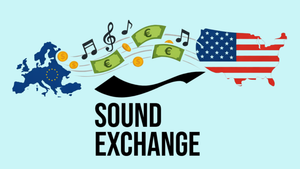
The boss of US collecting society SoundExchange has welcomed a change to Irish copyright law which means radio royalties collected in Ireland can now flow to American performers when their music gets airplay in the country. Even though no radio royalties flow in the other direction to European performers, because radio stations in the US don’t have to pay any money to any artists or labels.
That change to Irish law was the result of a ruling in the European Union courts which, SoundExchange CEO Michael Huppe insists, also obligates other EU countries to implement similar changes, so that more radio royalties flow to the US. “Implementation isn’t optional - it’s a legal obligation", Huppe says, adding, “creators everywhere deserve to be paid when their music is used, no matter their nationality”.
The copyright law changes in Ireland are “a significant victory for American creators”, Huppe continues. And “as Ireland prepares to lead the EU Council in July”, this new law “sends a powerful message” to those EU countries not currently allowing radio royalties to flow Stateside, which includes Belgium, Croatia, Finland, France, Slovakia and Slovenia.
However, the changes forced by what is often referred to as the ‘RAAP ruling’ are opposed by various music industry groups within the EU, who argue that European artists and labels will receive less income as a result, and that the EU court was wrong to insist that an EU-wide rule be applied on this particular copyright law technicality. Those groups have been calling on the European Commission to intervene.
That opposition was raised by the Irish minister responsible for copyright, Peter Burke, during a debate on the copyright law changes in the Irish parliament last month. Where other EU countries have amended copyright law to allow royalties to flow to the US, he said, “in some cases this has reduced royalty payments to EU artists”.
“Ireland was concerned about this issue and we understand that it is affecting Irish artists as well”, he added. However, “neither Ireland nor any other EU member state can legislate on a unilateral basis” because of the RAAP ruling.
However, he went on, “the European Commission is actively considering the possible solutions on this issue” and “I understand that a legislative proposal is being prepared to seek to resolve this issue and we hope it will be published by early 2027”.
One of the organisations calling on the Commission to intervene is pan-European indie label trade group IMPALA. Its Executive Director, Helen Smith, says, “Like other EU member states before them - the Netherlands, Denmark and Sweden - Ireland is changing its rules because it feels it cannot wait longer for the European Commission to come forward with a legislative proposal to clarify the EU rules”.
Smith also points out there is another reason why European countries might want to only send radio royalties to countries where there is money flowing in the other direction. Doing so “helps increase the level of protection worldwide by encouraging [other] countries to align with the level of protection which the EU offers to its own nationals”. So, it puts pressure on the US to introduce radio royalties there.
“IMPALA has consistently said that the Commission needs to fix the current situation, which is hurting European artists and labels”, Smith adds. Calling on the Commission to address this issue urgently, she also urges Ireland, once it takes over the Presidency of the EU, “to help speed up the process and encourage the European Commission to use trade pressure to raise the level of protection worldwide”.
Money collected by the record industry’s collecting societies when recorded music is broadcast or played in public usually flows around the world, so if UK artists are played on German radio, German society GVL collects the money and passes it on to its UK counterpart, PPL, which pays the UK artists and labels.
However, different countries have different rules when it comes to sending money to countries like the US, where a restriction in copyright law means no royalties are collected for public performance or airplay on AM/FM radio stations. Some countries do not allow radio and public performance royalties to flow to US labels and/or performers, because no money is flowing in the other direction.
Until the RAAP ruling, each EU country could set its own rule on this - some said royalties should flow to the US, some said they should not, and sometimes the rule is different for labels and performers. But following a legal battle involving the Irish performer collecting society - that’s RAAP - a precedent was set that all EU countries should allow royalties to flow to the US.
Of course, both SoundExchange and the European music industry would really like the US to change its copyright laws so that American AM/FM radio stations start paying royalties, some of which could flow to Europe - and a decades long campaign to get that change continues.
However, until that happens, we’ll see US and EU music industry groups campaign against each other over what copyright law should say about sending European radio royalties to American performers.