

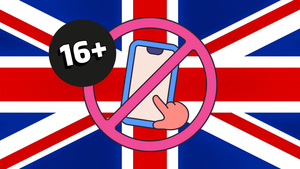
The UK government has announced a consultation that will consider whether to follow Australia’s lead in banning under sixteens from using social media. It has also strengthened its guidance that says schools should be “phone-free by default”, reducing how much time young people have to spend online.
Announcing the consultation, Technology Secretary Liz Kendall says, “technology has huge potential - to create jobs, transform public services and improve lives. But we will only seize on that potential if people know they and their children are safe online”.
Australia’s social media ban for the under sixteens went into effect last month. When the ban was passed by Australia’s Parliament in November 2024, Prime Minister Anthony Albanese said the measure was necessary to protect young people from the “harms” that social media can cause.
It’s known that various governments around the world are now following the developments in Australia very closely as they consider whether to introduce similar measures. If social media bans become more widespread, that obviously has a big impact on the social media platforms, but also on any brands, media or creators who use social media to engage younger teenagers.
The Australian government last week said its ban has so far been successful, with all the big platforms complying with the new rules and in the process cancelling or restricting about 4.7 million accounts. However, critics argue that many young people are circumventing the ban by using VPNs or have simply shifted over to less high profile apps that are not yet on the radar of regulators.
Australia’s eSafety Commissioner Julie Inman Grant told journalists that her office had indeed tracked a spike in the downloads of alternative apps following the introduction of the social media ban, but she said they hadn't seen a similar spike in usage of those apps. However, data is still being crunched.
The UK’s new consultation will consider various options for regulating how young people interact with social media other than just an outright ban for under sixteens. Other possible interventions include phone curfews to avoid excessive use and restricting potentially addictive design features on social media platforms such as ‘infinite scrolling’.
A social media ban for under sixteens is already supported by the UK’s Conservative Party. Its leader Kemi Badenoch said earlier this month that she would introduce a ban if she was in government. And John Nash - a Conservative member of the House Of Lords - has proposed a ban be introduced through an amendment to the Children’s Wellbeing And Schools Bill that is currently working its way through Parliament.
However, the Labour government seems to want to keep its options open for the time being at least, in part to allow a proper assessment of the Australian ban and whether it actually works. Meanwhile ministers have committed to respond to the newly announced consultation during the summer.
The new guidance for schools is more immediate. Existing government guidelines already said that schools should have policies that prohibit the use of phones and similar devices “throughout the school day”.
However, new guidance will “make it even clearer that schools need to be phone-free environments and that pupils should not have access to their devices during lessons, break times, lunch times or between lessons”.