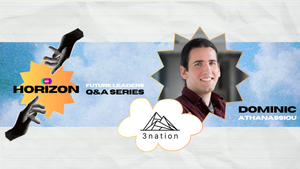
As part of our Horizon series of interviews, we are connecting with the music industry’s current and next generation of leaders to gather candid advice and insights into their career journeys.
Dominic Athanassiou founded 3nation five years ago, a PR agency working with bands, labels, festivals and tech companies, and with a focus on metal, dark electronic and avant-garde genres, music that rarely has mainstream appeal and demands a completely different approach to PR.
It’s a niche he’s carved out entirely on his own terms and the work backs it up: building the PR strategy for Fortress Festival over four years and helping transform it into an international destination black metal festival; leading campaigns for avant-garde icon Jarboe formerly of Swans; and securing a BBC World Service radio documentary slot for British-Iranian band Trivax.
His path in music started before university, launching MetalRecusants, a music review website that grew into a respected international publication, and which taught him how the industry works from the inside out and kickstarted a freelance PR career long before he had a job title. A detour through fintech followed, which he rates just as highly as any music role for the perspective it gave him.
His advice is refreshingly straightforward: don’t stress about getting a music industry job straight out of university. Be patient, focus on the long-term goal, and if the door isn’t open yet, develop transferable skills elsewhere while building your passion project on the side.
Start a Substack, an Instagram, a podcast; whatever makes sense for the music you love. Talk to bands at the merch table. If you’re a photographer, offer a review in exchange for a photo pass. A few strong relationships will always go further than knowing everyone in the room.
What’s your current role in the music industry?
I am the founder of 3nation, a PR agency for the music and tech industries that I started five years ago. I work with a variety of bands, record labels, festivals and tech companies.
The music I tend to work with is mostly metal and other dark, electronic and avant-garde genres that usually don’t have mainstream appeal, so my campaigns have to be very targeted to make sure the right audience is reached.
This doesn’t mean I don’t work with mainstream media, though, as I have secured coverage for clients with the likes of the BBC, The Guardian and many other “tier one” publications. As I also work with more corporate, B2B and start-up organisations, I have to balance different strategies and communication styles, which are totally different from the artist-first, “underground” campaigns.
What does your general day to day look like?
No day is the same, really! All of my work, other than when I’m working on-site at festivals and events, is desk-based. It’s usually a balancing act between drafting press releases and press packs, client meetings, and pitching client stories and music to journalists.
What steps did you take early in your career to gain experience and build skills to get you where you are now?
During my last year of school, I set up a music review website, MetalRecuants, and continued running it through university and the first couple of years of employment.
I managed to grow it to be a respected media publication with contributors from all over the world. By being in regular contact with writers, photographers, record labels and publicists from across the world, I not only made long-lasting connections but also learnt how the music industry works, especially PR.
Even before setting up MetalRecusants, I was involved with my local scene by attending as many concerts as possible, but also becoming friends with bands and helping them whenever I could - whether it was filming their gigs on my camcorder or updating their last.fm profiles.
This led me to start promoting friends’ bands more seriously. Initially, I was doing it for free, but as I gained more confidence and I professionalised my services, it became a paying gig.
We like to talk in the music industry about how connections and networking are the most important currency you can gain. And it’s true. Establishing those connections and that self-starting mentality early on has enabled me to be where I am now.
What opportunities did you explore early on that were particularly valuable?
Starting MetalRecusants was probably the most valuable “opportunity”. While I was at university, I leaned into the network I built and started picking up freelance paid gigs with other PRs. I continued my freelance PR journey beyond university.
Reality struck, though, and I had to get a “proper” job. I worked in financial technology for a bit before joining a reputable music/tech PR agency, and that was as valuable as any music role I had or network I built, because it taught me different views, topics and ways of working that have helped shape who I am now professionally.
Has the opportunity landscape changed since then?
On the one hand, it’s arguably much harder to get an entry-level job right now in any industry. On the other hand, though, it’s so much easier to create your own opportunities.
Nowadays, you don’t even need a website to make a mark. And it’s also easier to find people and communicate with them, whether it is LinkedIn, Instagram or even newsletter platforms such as Substack.
But remember to be kind, helpful and reliable because your reputation is everything.
Are there any specific internships, projects, or initiatives that you would recommend to newcomers looking to pursue a similar role?
I haven’t gone through any specific programmes like that, so it’s not my place to recommend them. What I would say, though, is to create your own opportunities. As I’ve mentioned above, it’s so much easier to do that today. If you are into the most obscure subgenre of music, start a Substack or Instagram profile about it.
Support the bands you like, but also talk to them; most of them are hanging out at the merch table or by the venue bar. Offer the bands a review in exchange for a photo pass - if you’re a photographer - or a press pass - if writing/podcasting is your thing.
It sounds like a cliché, but passion, dedication and hard work are the characteristics that will shine through in the music industry.
What advice do you have for building and leveraging a professional network in the music industry?
Don’t stress about meeting and getting to know everyone. A few strong relationships initially will go farther than showing your face to everyone. Be polite and show your passion, but also tread carefully and don’t be too “networky” - talk to new people as you would when meeting a new friend.
How has the evolving digital landscape impacted your role, and where do you focus to stay ahead?
There’s more competition because everyone can easily start a PR business, and at the same time, the media landscape is constantly changing.
The bigger publications are either shrinking in size or are being closed down, whereas journalists are flooded with emails and new music every day.
I try to overcome this by a) ensuring that press releases and music promo send-outs are accompanied by tailored and personalised communication with media, and b) not just focusing on the “tier one” publications but all relevant blogs, newsletters, podcasts and social media profiles for a specific client.
What trends or changes do you see on the horizon for the music industry, and how can early career professionals prepare for them?
I’ve noticed a trend over the last few years that specialised and niche subcultures are proving to be more “successful” than broader ones. The best example is probably in the live music sector, where new and old festivals are struggling.
Even in a niche genre such as metal, events that choose a specialisation such as black metal in the case of Fortress Festival, or brutal death metal in the case of Offal Fest, have a much more dedicated audience than those that try to cover all kinds of metal sub-genres.
What’s one piece of advice you wish someone had given you at the start of your career?
Don’t waste time worrying whether your first job after school or university is in the music industry. Be patient and focus on the long-term goal. If you can’t get a music industry job because competition is so tight, apply for jobs in other industries that will match your transferable skills. Work on your passion on the side; it doesn’t matter if it doesn’t have mainstream appeal, and build your network around that.