

Over the years Spotify bosses have suggested various added benefits that they might offer as part of their long-promised never-launched higher-cost super premium tier, including remix tools and pre-sale access to tickets.
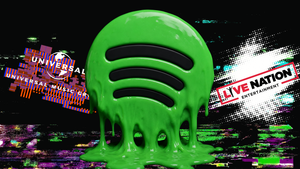
Yesterday, during an event for investors, Spotify execs announced new partnerships with the two biggest music companies in the world - Universal Music and Live Nation - which will finally make those two things available, though only the remix tools will cost extra. And it remains to be seen whether either of those benefits are things people actually want.
The new licensing partnership between Spotify and Universal will enable an AI-powered tool that “allows fans to create covers and remixes of their favourite songs from participating artists and songwriters”. That being one of the uses of generative AI that Universal bosses like, and which they’ve been trying to persuade various music AI start-ups to focus on, including Udio.
“Solving hard problems for music is what Spotify does”, says Spotify co-CEO Alex Norström, before adding, “fan-made covers and remixes are next”. Whether or not that’s a problem we really need solving is debatable, but Spotify is on the case either way. Just like Udio, but with the significant advantage of having a massive existing user-base that might be persuaded to pay to utilise the new covers and remixes tool.
When it comes to solving that problem, sorting out licensing for AI-generated covers and remixes is probably harder than developing the tech, especially on the publishing side.
While the Universal publishing division is part of this new Spotify venture, the major often doesn’t own the copyrights in the songs contained in the recordings its labels release, certainly not outright, given how common co-ownership is with songs.
Plus you have to factor in rights controlled by the collecting societies rather than the publishers, even more so once you go beyond Anglo-American repertoire.
Then there’s the tricky task of securing artist and songwriter consent. The majors aren’t planning on seeking that consent across the board when they opt their catalogues into AI licensing deals, but last year Universal head honcho Lucian Grainge reassured his staff that “we will not license any AI model that generates new songs which incorporate an artist’s existing songs without their consent”.
Expanding on the new covers and remix tool, Norström says the whole thing is “grounded in consent, credit and compensation for the artists and songwriters that take part”. Which suggests Universal does indeed plan to ask artists and songwriters if they want to be part of this new gimmick.
There’ll be extra compensation if they do because users will have to pay extra to access the new tool, creating an extra royalty pool which can be shared with participating artists and songwriters.
Quite how that money will be shared isn’t clear, because it never is. Though where the AI is generating covers of existing songs, presumably the songwriter should expect to see a bigger cut of the money than with standard streams, as with this gimmick the song is everything.
Grainge himself has assured everyone that “this initiative is firmly artist-centric”, which is usually Universal code for “skewed entirely to the benefit of my shareholders and bonus” and normally means grassroots artists can expect to be fucked over. But maybe this time artist-centric actually means artist-centric. Or, in the case of the AI covers, songwriter-centric. It’s about time something was songwriter-centric.
As for Spotify’s big ticketing development, that’s a new scheme called Reserved that will offer an artist’s “most dedicated fans” on the platform priority access to concert tickets. The “most dedicated fans” will be identified by a bit of Spotify data crunching and two tickets will then be “reserved” for those people, available to buy during a specific time slot, which will usually last for about one day.
An artist’s superfans may well already have access to tickets before they go on general sale via a mailing list promotion or similar, but Spotify is keen to stress its new Reserved scheme simplifies things. It says, “no racing against thousands of other fans, no hunting for codes, just a reserved window to purchase before tickets are on sale to the general public”.
Live Nation boss Michael Rapino revealed last year that the company was in talks with streaming services that were keen to have access to pre-sale tickets for their users, and the live music giant is the first partner on Spotify’s Reserved programme.
When discussing those negotiations last year, Rapino pointed out that lots of people want access to pre-sale tickets, making them “a very valuable asset” and, therefore, “there’s a cost to that”. Artists often do their own deals on pre-sale rights, he added, and “they’re not giving that away to anyone for free”.
We don’t know what deal Spotify has struck with Live Nation to get Reserved off the ground, nor do we know how many tickets will be available for any one show. But it seems likely not all superfans of any one artist will actually benefit. Managing expectations, Spotify adds, “there will be significantly more superfans than there are seats available on a tour, so not every fan will receive an offer”.
It then explains, “eligibility is based on your engagement with the artist on Spotify and where you’re located, so make sure your preferred location is enabled in the Live Events Feed and your notifications are turned on”. So yes, make sure you’re doing that.
Unlike the remix tool, which will cost extra, Reserved will be available to all premium subscribers, meaning it’s not part of the long-promised plan to get more money out of the average user. At least not initially. The scheme will start in the US with “more markets to follow”.