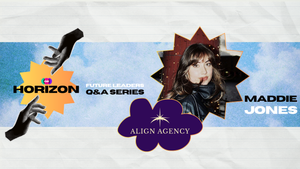
As part of our Horizon Future Leaders series of interviews, we are connecting with the music industry’s next generation of leaders to gather candid advice and insights into their career journeys.
Maddie Jones is a social media and marketing manager at Align Agency - a female-focused marketing agency working with the likes of Charli XCX - where she started as an intern after graduating and has grown within the team ever since. But the groundwork was laid long before that.
Recalling her university experience, she’s honest that the music business degree itself wasn’t the most valuable part. That was building relationships with lecturers, immersing herself in the music scene around her, interning at independent label Tru Thoughts, putting on her own gigs, helping local promoters and running festival stages. She said yes to everything and figured it out as she went.
By the time she graduated and landed the internship at Align, she already had real experience, and found a mentor in her boss Tahnee who invested time in her development in a way that’s genuinely shaped how she works today.
What makes Maddie’s perspective particularly relevant right now is how she approaches social media: as a fan first. The music industry is nothing without its fanbases, and actually paying attention to what fans are responding to, through comment sections, forums and social posts, gives her insight that no algorithm update can replace.
At a time when audiences are visibly moving away from being chronically online and craving something more authentic and human from the artists they love, that fan-first instinct matters more than ever.
Her advice is worth taking note of: take every opportunity, even before you know what you’re good at. Seek out people you can learn directly from and always ask for feedback, even when it’s hard to hear.
And if you can, work with artists around you; actually helping someone release music teaches you what artists need from their teams in a way nothing else really does.
What’s your current role in the music industry?
I’m a social media and marketing manager for artists at Align Agency, a female focussed marketing agency.
What does your general day to day look like?
Honestly, it can be so different day to day, which keeps me on my toes!
My typical days involve updating content calendars, brainstorming content ideas, editing content, creating rollout plans for releases and analysing data to inform my strategies.
I also check in with my clients daily, so a lot of my time is spent catching up with them and their teams on what is happening with their projects.
What steps did you take early in your career to gain experience and build skills to get you where you are now?
I always knew I wanted to work in music, so when I went to university I knew I wanted to study music business and learn about how the industry works from people within it.
I think the best thing I did at university wasn’t my actual degree, but building connections with my lecturers and fully immersing myself in the music scene around me. I just said yes to everything and figured it out as I went.
For me, I learn best by physically doing something, so throwing myself in at the deep end and figuring things out with a healthy dose of self-belief really helped me develop my skillset.
I started out working for independent record label Tru Thoughts as a press and radio intern, which taught me a lot about how record labels operate internally and how a release cycle should look for artists.
I then did a lot of work in live music, putting on my own gigs with friends, helping out local promoters and running stages at various festivals. All of these roles taught me so much about how artists should be treated, handling stressful situations and the importance of staying organised.
After graduating, I took a marketing internship at Align, where I still work today. I really clicked with my boss Tahnee, and she has been a huge part of my development, teaching me how to nurture artists, manage release campaigns and develop effective strategies.
Having a mentor who has invested time in passing on their knowledge, and who has allowed me to learn by working alongside them on real projects, has been truly invaluable to my growth and something I am very grateful for.
What opportunities did you explore early on that were particularly valuable?
I took every opportunity that came my way, which meant I gained experience across quite a few areas of the music industry before finding what I was really good at.
I think one of the most important things I did was seek out people I could learn directly from. Whether that was managing projects together, observing the ways in which they operate, or always asking for feedback on my own work, even when that feedback was difficult to hear.
I also think that working with artists I met through university to help them release their music was hugely valuable in helping me understand what artists actually need from their teams, and how I could best help them achieve their goals.
Has the opportunity landscape changed since then?
I think if you ask anyone looking for a job right now, they’ll tell you just how difficult it is to break into any industry given how saturated the job market has become. I definitely felt this when I came out of university.
A lot of my early roles in music came through unpaid work and volunteering, which I still believe is one of the best ways to gain initial experience. That said, I have noticed a rise in local development schemes aimed at improving access to the industry, which is really encouraging to see.
Are there any specific internships, projects, or initiatives that you would recommend to newcomers looking to pursue a similar role?
There’s a ton of online resources and networks which I’d recommend looking into if you’re wanting to start out in music, to name a few:
- The Cats Mother - not-for-profit female focused service that provides free, 30 minute meetings (in-person or online) between young emerging creatives aged 18-25 with professional women working in the music and creative industries.
- Melo Compass - a podcast and IG page dedicated to sharing music industry insights and job opportunities within music.
- Music Ally - a platform dedicated to developing music knowledge and connecting people within the music industry.
- Shesaid.so - a female focussed community designed to connect females in the music business.
What advice do you have for building and leveraging a professional network in the music industry?
When you’re starting out building a network in the music industry, you can quite easily feel overwhelmed or intimidated by people and their titles, I know I definitely did when I was starting out.
Something important to remember is that even if you don’t feel like you have much experience early on, there is always something you can bring to the table. Whether that’s insights into how you think as a fan, experiences you’ve had with artists, or knowledge you’ve accumulated through your own research. There’s always something valuable you can add.
Don’t be afraid to speak up and ask questions! The art of conversation is quite literally built on the back and forth of asking questions and being curious about what the other person has to say. When you take a genuine interest in what someone is saying, it really shows.
Being responsive and enthusiastic about what you’re doing also plays a huge part in making connections that are meaningful and lasting.
How has the evolving digital landscape impacted your role, and where do you focus to stay ahead?
Working in social media means constantly keeping up with new algorithm updates, best practices and trends, which can sometimes feel a little overwhelming given how fast-paced things move.
For me, I like to stay informed by reading music industry newsletters that break down emerging trends and news stories. Great ones for this are Complete Music Update and Music Business Worldwide. I also read a range of Substacks on similar topics too.
Listening to podcasts that comment on not only the music industry but pop culture as a whole is also really helpful for staying up to date with what’s going on in the entertainment world, which often has a lot of crossover with social media trends. Some podcasts I’d recommend for this are Sidetracked with Annie & Nick and Popcast.
I also think that being a music fan first and foremost is invaluable for staying ahead of the game. The music industry would be nothing without its fanbases, so analysing what fans are responding to and listening to what they want through forums, social media posts, comment sections and so on has given me a huge amount of insight in my role.
What trends or changes do you see on the horizon for the music industry, and how can early career professionals prepare for them?
I see a lot of audiences shifting their behaviour, moving away from being chronically online towards craving a more human connection. People are tired of being on their phones constantly, endlessly consuming clickbait content and AI generated brainrot.
Looking forward, I believe fans are seeking content that feels authentic from their artists, something that builds a world around their music that fans can genuinely get involved in.
Take Zara Larsson as an example. Her personality shines through in every aspect of her content, which fans adore, and her visuals are so distinct and consistent that they are instantly recognisable; creating a world that fans can truly immerse themselves in.
I also believe that in person activations are becoming increasingly invaluable in marketing campaigns for fulfilling that human connection fans are craving. Whether that is pop-up performances with artists in different cities, release parties fans can attend, installations people can visit, or exclusive listening events for the most dedicated superfans.
What’s one piece of advice you wish someone had given you at the start of your career?
A general piece of advice that I still have to remind myself of is that it’s okay to get things wrong, as long as you’re willing to learn from your mistakes.
It’s so easy to hold yourself to an impossible standard when you care deeply about what you’re doing, so sometimes the best thing to do is make a mistake, ask yourself why it happened, rectify it, and move on.
People don’t necessarily define you by the mistakes you make, it’s how you recover and move forward that people remember.